Sunday, April 6, 2008

Brazil's’ Dengue Fever Epidemic Introduction

Military to fight Dengue fever in Rio de Janeiro, Brazil

24-Mar-2008


The Military are being used to tackle outbreaks of Dengue fever in Brazil.

According to Brazil's Defence Minister Nelson Jobim, the military is standing by to help the city of Rio de Janeiro deal with soaring numbers of Dengue fever cases.

Health authorities say to date there have been more than 33,000 cases of Dengue already this year which one doctor has termed as a catastrophe.

Since the beginning of the year across the state of Rio, 49 people have died from the potentially deadly fever, the vast majority of victims have been in the city itself, with hospitals struggling to cope.

Dengue fever is a disease bourne by the Aedes mosquito which causes high temperatures, headaches and muscle pain and in some forms can be a killer; there is no vaccine or drug to treat it.

Urban areas where stagnant waters prevail are an attractive breeding ground for mosquitoes.

While overall in Brazil officials say cases have fallen, in the state of Rio de Janeiro there has been a significant rise with public hospitals in the northern and western districts of the city overwhelmed by the number of patients seeking treatment.

The latest victims are reported to be a seven-month-old baby girl and a 12-year-old boy.

The idea of setting up military hospitals in areas which have been worst affected has been proposed amongst growing criticism of the authorities for their handling of the crisis.

The local doctors' union has gone so far as to urge for health officials to be charged with criminal negligence.

While Mr Jobim has not blamed any specific authority, he says there has been a "leniency in the campaign against Dengue" for which a price is now being paid.

A crisis centre is expected to be in operation shortly advising children and adolescents, who have been among the worst affected by the outbreak, to wear long trousers, socks and shoes to help prevent mosquito bites.

Easter holiday leave has also been cancelled for doctors, with hospitals now reporting more than 2,000 new cases each day.


Labels: , ,

Tuesday, March 11, 2008

Clinton link in Brazil Ethanol Probe

10 March 2008
By Alan Clendenning

SAO PAULO, Brazil - A team from Brazil's Labor Ministry found "degrading" living conditions for 133 sugarcane workers employed by an ethanol company whose investors include former President Clinton and other high-profile financial players.

At five sites inspected, workers "complained they were suffering from hunger and cold, and all of the locations were overcrowded and with terrible sanitary conditions," according to a statement issued Friday by Jaqueline Carrijo, who led the inspections last month.

The target of the probe, Brazil Renewable Energy Co., known as Brenco, apologized over the weekend and said it is fixing the problems at its rural operations, which turn sugarcane into ethanol.

Clinton's connection is via an investment in Brenco by The Yucaipa Cos., a U.S.-based fund in which Clinton was a senior advisor until last year. His investment in Brenco is valued between $15,001 and $50,000, according to a financial dislosure report submitted last year by his wife, presidential candidate Hillary Rodham Clinton.

Yucaipa, whose chairman is prominent Democratic billionaire Ron Burkle, holds an overall 2.8 percent stake in the initial $200 million raised by Brenco last year to start up operations in Brazil's booming ethanol sector.

Bill Clinton spokesman Matt McKenna said that the former president's investment made via Yucaipa was small but that he had been assured Brenco was "committed to the highest ethical standard with regard to the treatment of its workforce and of the environment."

"The president finds these allegations deeply troubling and expects Brenco to move swiftly to ensure that those responsible are held accountable," McKenna said, adding that Clinton is "taking steps to ensure that there is an appropriate transition for his business relationships should Senator Clinton become the Democratic nominee."

The Brazilian labor probe focused mostly on living conditions for the workers, including 17 who were paying rent to live in housing overrun by rats and cockroaches, Carrijo said. In addition, trucks lacked special seatbelts for workers who ride atop the vehicles as they throw sugarcane seedlings to the ground, she said.

Details of the investigation were first reported Saturday in the newspaper Folha de S. Paulo, Brazil's largest.

Brenco said the problems happened while it was mobilizing 3,500 workers to plant sugarcane on 86,500 acres in three central Brazil states.

"These incidents, which are being addressed, are contrary to the policies of Brenco, which will continue to invest in (worker) living facilities because it believes it's the best way to meet the sugarcane workers' needs for comfort and well being," Brenco said in a statement.

Brenco's investors include Vinod Khosla, a venture capitalist who was one of the co-founders of Sun Microsystems; America Online founder Stephen Case; Hollywood producer and Democratic fundraiser Steven Bing, another close Clinton ally; and former World Bank President James Wolfensohn.

The company is run by Henri Philippe Reichstul, the former chief executive of Brazil's state-run oil company, Petroleo Brasileiro SA.

Yucaipa spokesman Frank Quintero characterized the fund's investment in Brenco as small and said it has no management role.

"Newspapers report that Brenco has taken immediate action to remedy the situation," he said in a statement. "If that is not the case we will sell our shares in the company."

Brazil is the world's second-largest producer of ethanol after the United States, but is the No. 1 exporter. Experts say Latin America's largest nation could become an ethanol superpower because its sugarcane is more efficient for ethanol production than the corn used in the U.S.

UNICA, Brazil's association of sugar and ethanol producers, has acknowledged that working conditions in Brazil's cane fields have caused an image problem that could hurt exports.

While cane cutters receive good salaries by Brazilian standards, they spend long hours in the hot sun and suffer a litany of bone and muscle injuries and machete cuts. Their eyes and lungs are punished by ash from working in fields recently burned to facilitate cutting and to kill off rats, snakes and scorpions.

Most of Brazil's sugarcane-ethanol operations are owned by Brazilian individuals and companies, but foreign investment is increasing rapidly.

Labels: , , ,

Wednesday, July 4, 2007

Palestinian Refugees Stranded in Deadly Iraq; Brazil Comes to the Rescue

4 July 2007
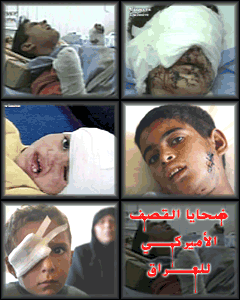
After the UN refugee agency called for the immediate evacuation of at least a dozen seriously ill Palestinians -- mostly young children – who live in refugee makeshift camps in Baghdad and on the Iraqi side of the deserted border with Syria, Brazil offered to take them in, UN officials said yesterday.

"Without evacuation and life-saving medical help, they could die or suffer lifelong complications," said Ron Redmond, spokesperson for the United Nations High Commissioner for Refugees (UNHCR), about the Palestinian refugees stranded in war-ridden Iraq. "We currently have 12 cases in urgent need of medical evacuation, the youngest just 15 months old," he added.

Recently, a UNHCR team visited the isolated Al Waleed camp near the border with Syria and found that several young people among the 1,071 displaced Palestinians there were in serious need of specialized medical treatment. Among the ailing were a youth with a hole in his heart, two children with Hodgkin's disease, one youth about to lose his leg because of a vascular disease and a young man with severe diabetes who is losing his sight.

But Redmond said there were more cases in need of urgent attention.

"We have also identified a two-year-old with cerebral palsy who has very low immunity, is in urgent need of physical therapy and has stopped eating. Another child, a 13-year-old girl suffering from a spinal injury, will be permanently paralyzed from the neck down unless she gets treatment soon," he said, adding that the girl's mother died a few years ago, her father was murdered in January and her home was burned by militia.

Other urgent cases were discovered in Baghdad -- a 15-month-old boy in danger of paralysis from the waist down, and a 14-year-old boy who has had 13 operations but suffers from severe urinary and bladder problems.

Despite efforts of UNHCR and the International Committee of the Red Cross (ICRC) to provide proper medical care, unsanitary conditions in the compounds, shortages of medical staff and mounting fears of attacks have led to the acutely deteriorating health of Palestinian refugees in camps inside and outside Baghdad.

The UN refugee agency said that Palestinians in Baghdad refuse to seek medical care because they are afraid for their safety. UNHCR also reported that in extreme cases some people, who refused to visit medical facilities because they feared attacks, died in their homes as a consequence.

There are about 1,450 Palestinians living in dire conditions at Al Waleed and Al Tanf camp, and up to 13,000 still living in Baghdad from an original population of 34,000 in 2003, according to the UN. Those remaining in Iraq have no access to another country, and no communities to flee to inside Iraq. In the meantime, they continue to be targeted.

Dire conditions are also found in Al Tanf camp where almost 400 displaced Palestinians live amidst rising summer temperatures and without hope for a solution.

"This is the hell that we have read about it in holy books. We are dying slowly and feel the world has forgotten us. How long are we going to stay in this desert?” asked one camp resident. "Is the world so small and unable to rescue 10,000 Palestinian refugees from the killing, torture and hell of Iraq and the prison of this camp?"

As in Al Waleed, camp residents are facing medical problems and shortages. One Palestinian woman here suffers from kidney problems and had to be medically evacuated to Syria two weeks ago to receive urgent treatment. She had to leave her two young daughters alone in the camp because she was not allowed to take them along.

Life in the camp appears to be particularly hard on women. "In addition to everything else that we have to do, including feeding our children, teaching them and above all holding up patiently so that life goes on, our husbands are so stressed out and quite often they vent their anger on the women," said another female refugee living at Al Tanf camp.

Earlier this year, UNHCR and the United Nations Relief and Works Agency for Palestine Refugees in the Near East (UNRWA) set up five tented classrooms for the 122 children living in the camp and this has helped raise their morale. "The school was a great initiative but still our children have no future in this desert. They have no touch with the outside developed world," said one mother.

Yesterday the government of Brazil offered to resettle about 100 Palestinians living in Iraq starting in mid-September. About 22 Palestinian families are excepted to settle in Sao Paulo state and 18 families in Rio Grande do Sul, said UNHCR spokesperson Jennifer Pagonis.

As part of the resettlement, Brazil plans to integrate the Palestinians into Brazilian society. Prior to departing, each group of roughly 30 people will be extensively briefed, culturally sensitized and offered Portuguese languages lessons by Brazilian UNCHR staff. All of the refugees will receive accommodations, furniture and material assistance for up to 24 months, with unaccompanied elderly refugees being settled in homes where medical treatment will be provided, according to UNHCR.

In recent years Brazil, Canada and New Zealand have been the only countries to offer resettlement to Palestinian refugees from Iraq, according to UNHCR.

Labels: ,